
Forget Munich! Germany’s Oldest City Offers 2nd-Century Roman Ruins, $4 Local Beer, And No Mega-Crowds
We’ve all been there as soon as: pulling as much as that cute little European metropolis you’d been enamored with for months after saving it to your Instagram faves, solely to comprehend the crowd-free, idyllic model exists solely on social media.
Or at some ungodly hour that journey influencer you observe didn’t hassle mentioning they had been up at.
Germany’s filled with these: from the jam-packed biergartens of Hamburg, right down to Munich‘s gongshow of a Marienplatz, it feels much less like your typical Old World escape, and extra like a sport of dodge-the-selfie-stick-army.
Lucky for the History buff that lives in you, not all German gems have met the identical dire destiny. In truth, the oldest metropolis within the nation, filled with 2nd-century Roman monuments and conventional bars serving up native craft beer from round $4, nonetheless feels comparatively unspoiled:
Welcome To Trier: Germany’s Oldest City Dating Back To The 2nd-Century AD
Lying inside simple attain of the Belgian border, and barely 10 miles from Luxembourg—Luxembourg City itself is round 30 miles away—Trier is the oldest German metropolis on document.
We’re speaking an often-overlooked, 113,000-people-strong, mid-size hub with over 2,000 years of fascinating historical past to its title, simply making it Germany’s most historical main settlement, in step with Roman-era cities throughout Spain, France, and Italy itself.
From a once-powerful imperial capital of the Roman world, and a very powerful metropolis on what’s now German soil at one second in time, to a secondary vacation spot, arguably extra well-known amongst cross-border Luxembourger guests than your common American:
Last yr, Trier registered solely 467,804 in a single day guests, in accordance with town itself, far behind Munich’s 6 million guests in 2025.
Not that we’re complaining, thoughts you. We like our historical gems with out six-deep selfie queues.
Some Of The Best-Preserved Roman Buildings North Of The Alps
Not to go full History lecturer on you, however there’s no manner you can absolutely grasp Trier’s significance and magnitude with out dabbling a bit of into its wonderful previous.
It was based round 16 BC as Augusta Treverorum, which is principally good outdated Latin for ‘Augusta among the Treveri’, and by the top of the third century, it had been elevated to the standing of one of many Roman Empire’s 4 imperial capitals beneath the Tetrarchy.
Granted, the empire had spent a long time lurching from civil battle to frontier disaster, Germanic incursions, and emperors dropping like flies, and Diocletian’s four-capital association was basically one gigantic administrative try to cease the entire thing folding in on itself.
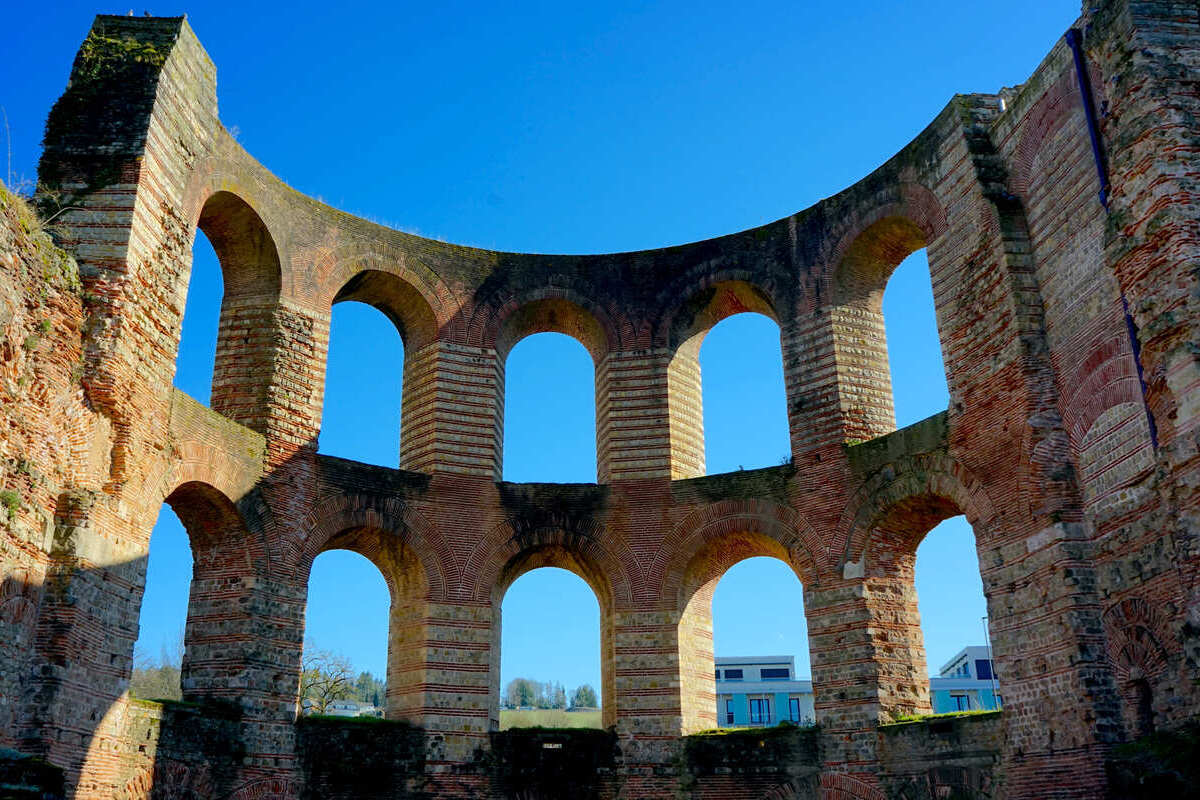
Still, we’ll exit on a limb and say having been to an precise Roman imperial capital on German soil is a significantly higher journey story than your basic-AF coworker Steve getting back from Rome with a Colosseum selfie and all of a sudden pondering he’s Mary Beard.
You can maintain Rome, Steve.
UNESCO itself notes Trier grew to become one of many Tetrarchy’s capitals on the finish of the third century and was as soon as often called the ‘second Rome‘.
There’s no Ancient Colosseum right here, certain, however there’s one thing equally cool in our e-book:
Behold: Porta Nigra
Trier’s Stunning Roman-Built, Gray-Sandstone Ancient Gate
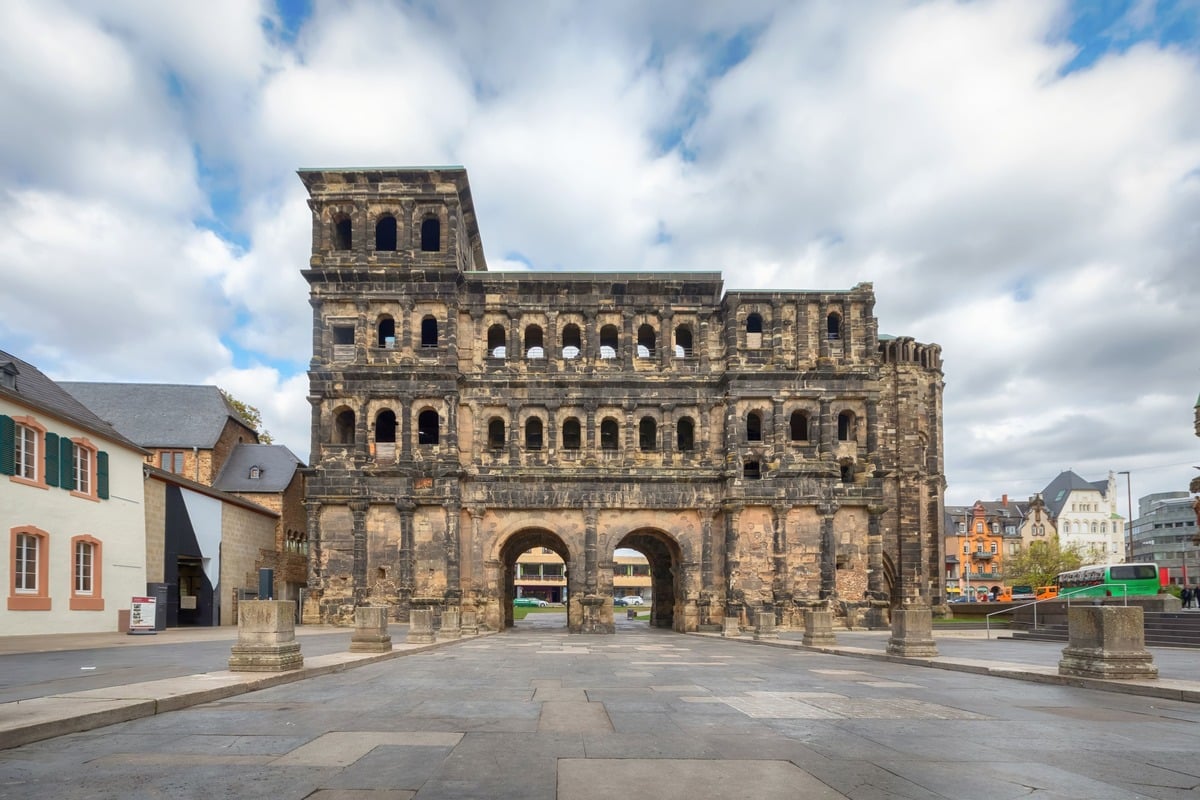
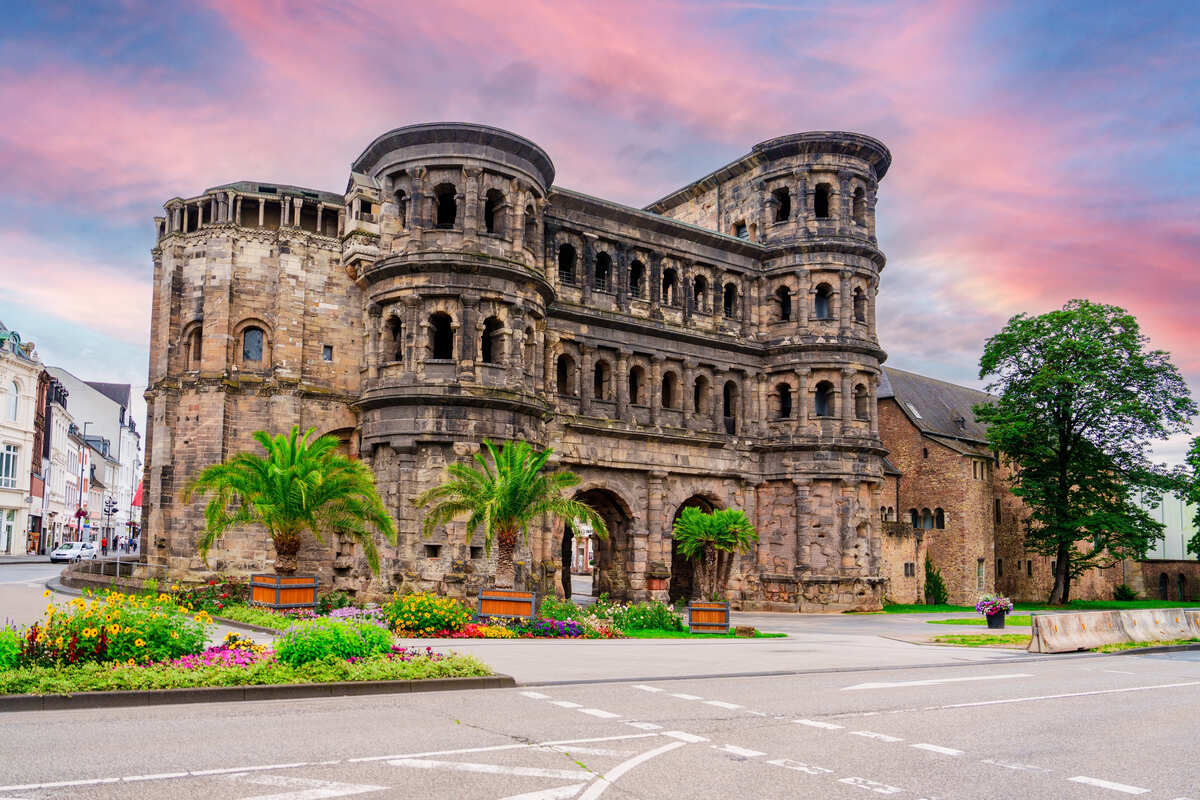
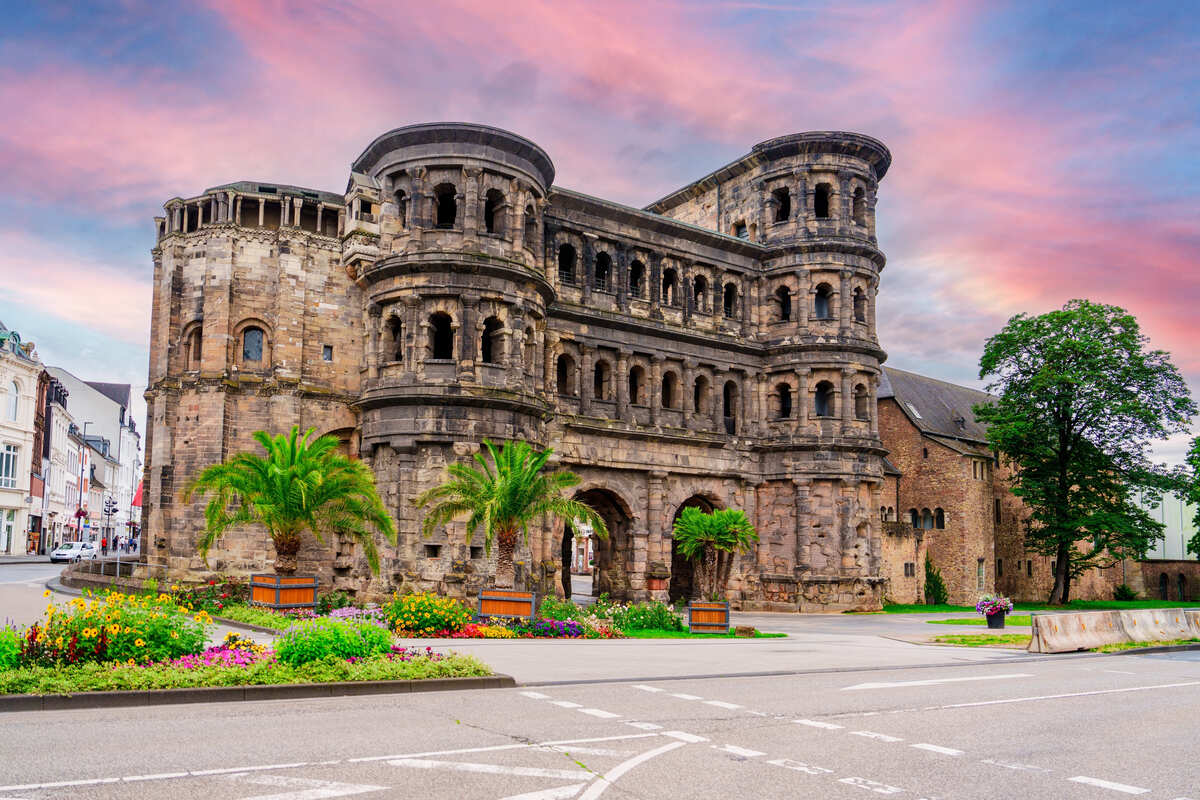
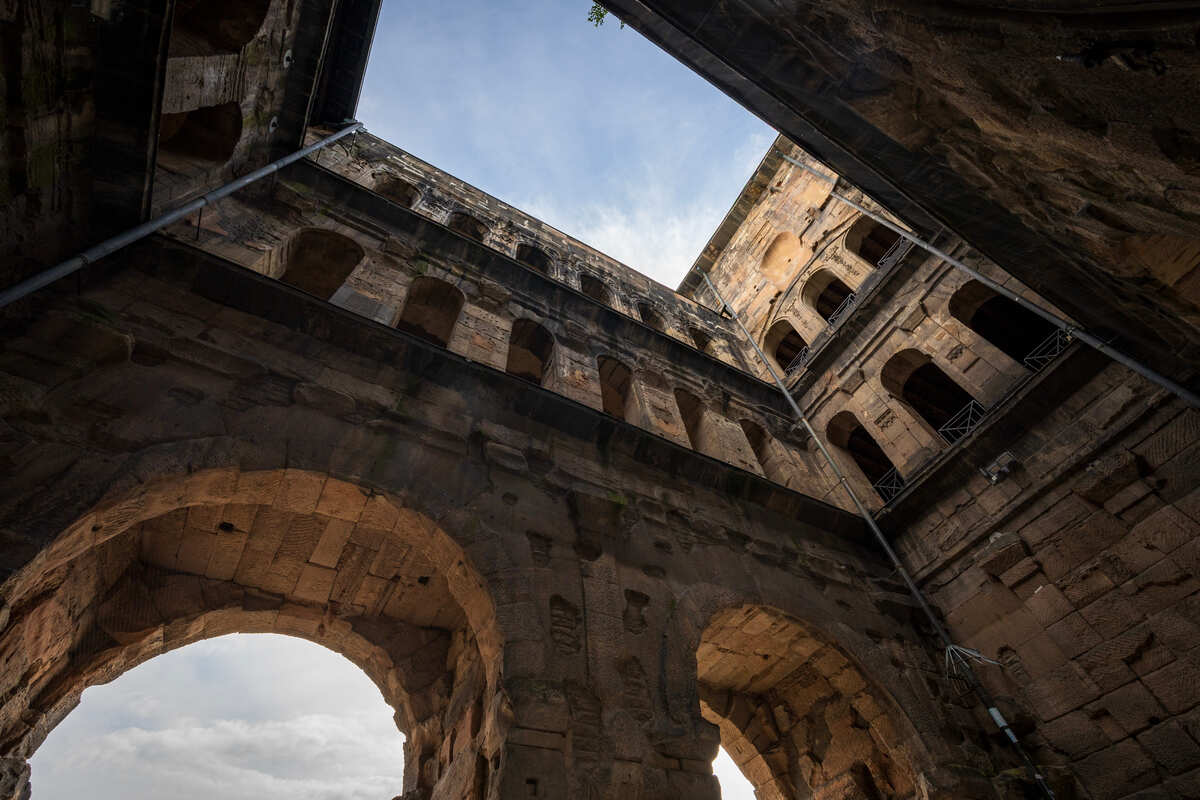
Porta Nigra, or Black Gate, is an enormous, Roman-era grey sandstone magnificence that’s been guarding the doorway to the Historic Center for shut to 2 millennia.
You gained’t discover a better-preserved Roman metropolis gate wherever North of the Alps, definitely not in largely rebuilt, post-WWII Germany.
It’s no marvel it’s a UNESCO World Heritage Site. One of the O.G.-ish ones, too, inscribed all the best way again in 1986.
You know, earlier than it typically felt like UNESCO began handing the badge to any and all crumbling stone partitions that efficiently crammed out some paperwork.
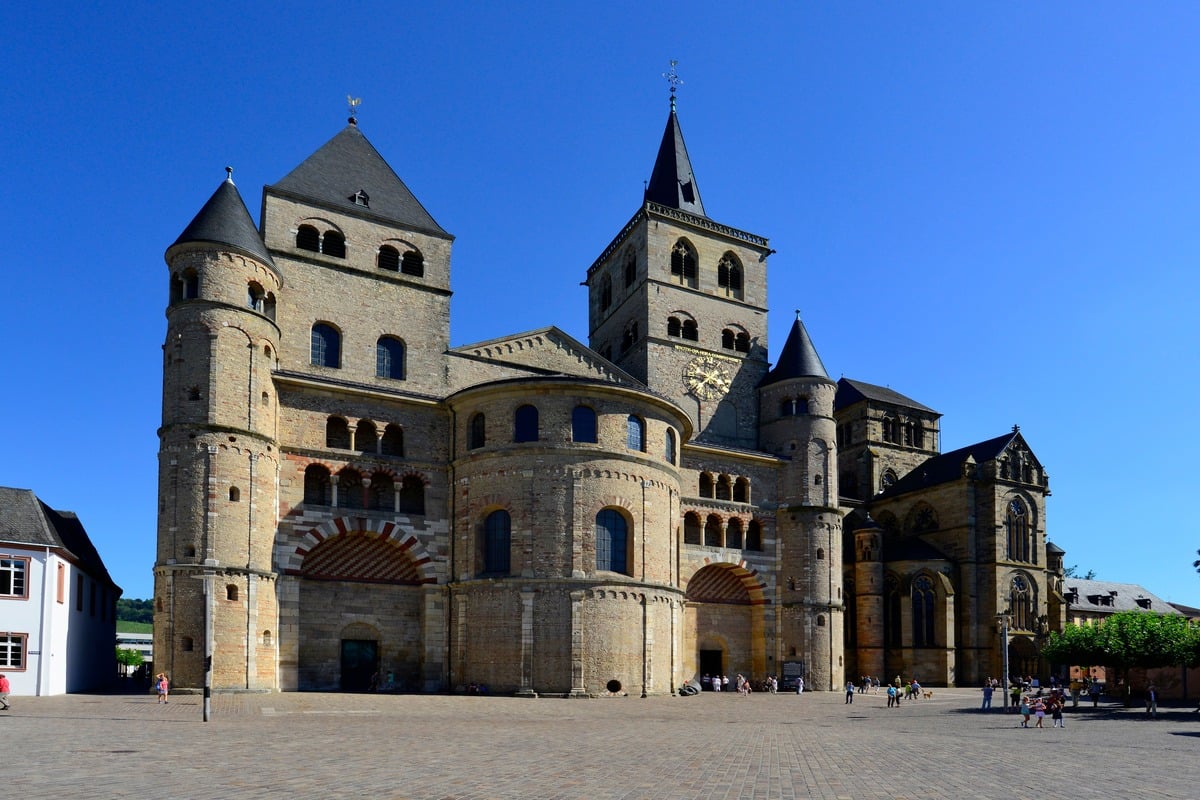
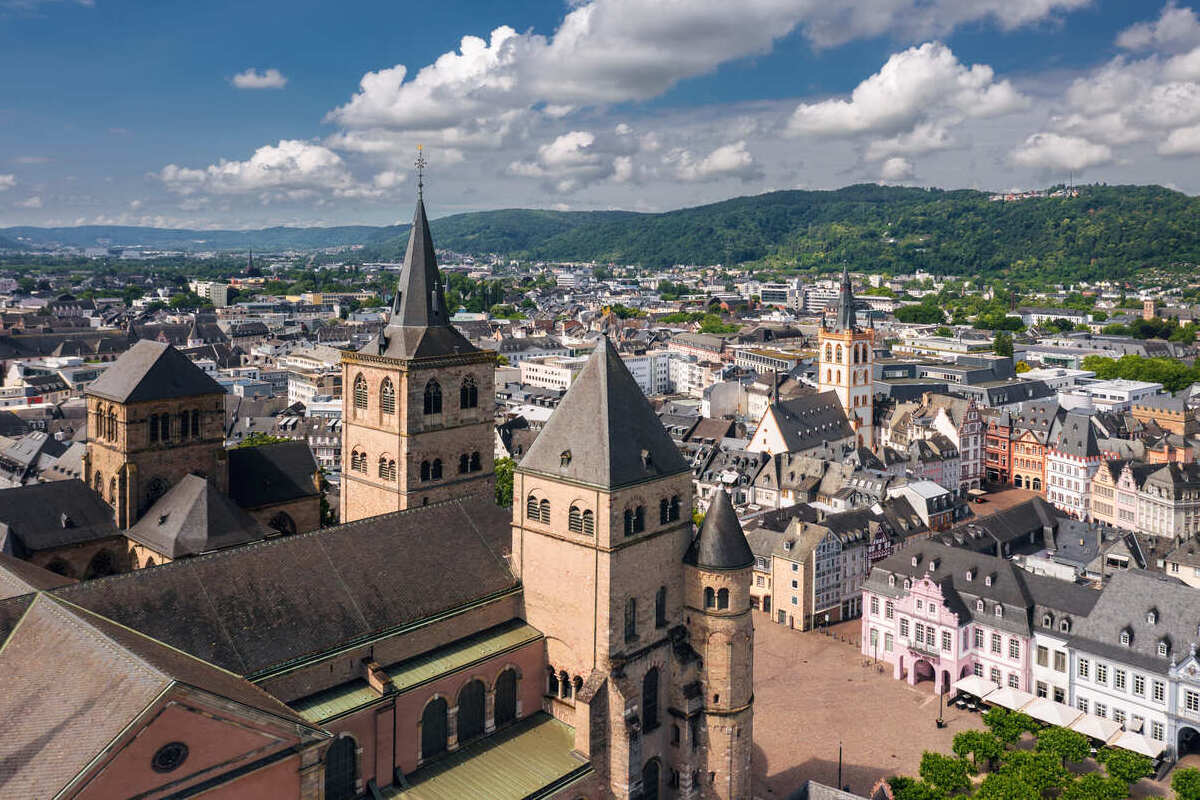
That’s not the one historical construction you’ll discover strolling across the compact Old Town’s cobbled lanes: Trier Cathedral is a monumental, four-tower edifice rising above pink gable roofs and church spires.
Yet one other UNESCO-listed gem—you’ll quickly discover that’s a operating thread throughout Trier—it’s Germany’s oldest cathedral, constructed over a Constantinian palace complicated that was transformed into an unlimited church starting across the yr 330.
Parts of the cathedral’s Roman cloth survive to at the present time, layered beneath centuries of Romanesque, Gothic, Baroque, and everything-in-between additions.
But wait, we’re not completed but:
Ancient Monuments Galore
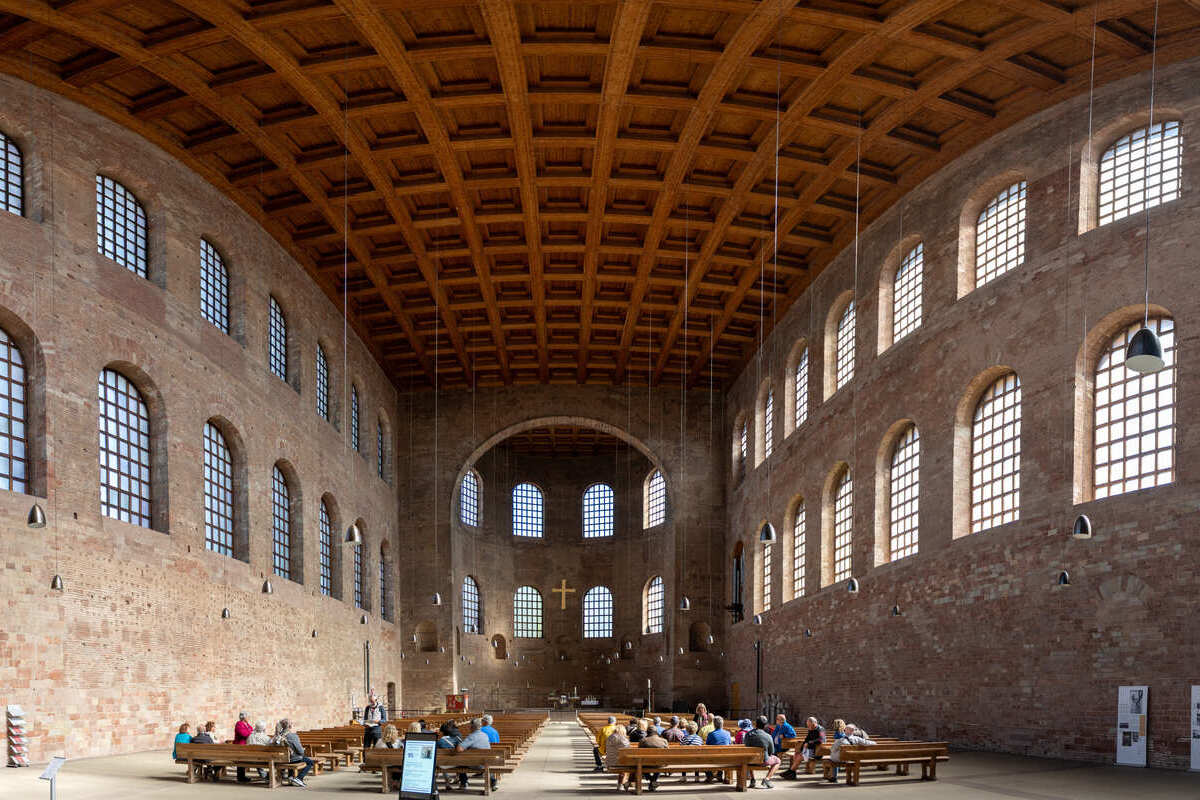
A brief stroll from the cathedral, Aula Palatina, in any other case often called the Constantine Basilica, is a grand, brick-built imperial viewers corridor relationship again to the early 4th century.
At roughly 220 toes lengthy internally, with partitions rising over 100 toes, it stays one of many largest column-free rooms to outlive from Antiquity. Looking at it from the skin, you’d swear the Romans packed up and retreated again to the Italian Peninsula yesterday.
Other must-see Roman remnants round Trier embrace:
- The ruins of three separate Roman tub complexes, together with the Barbara Baths, a sprawling 2nd-century facility overlaying roughly 452,000 sq. toes and usually considered the biggest Roman baths north of the Alps
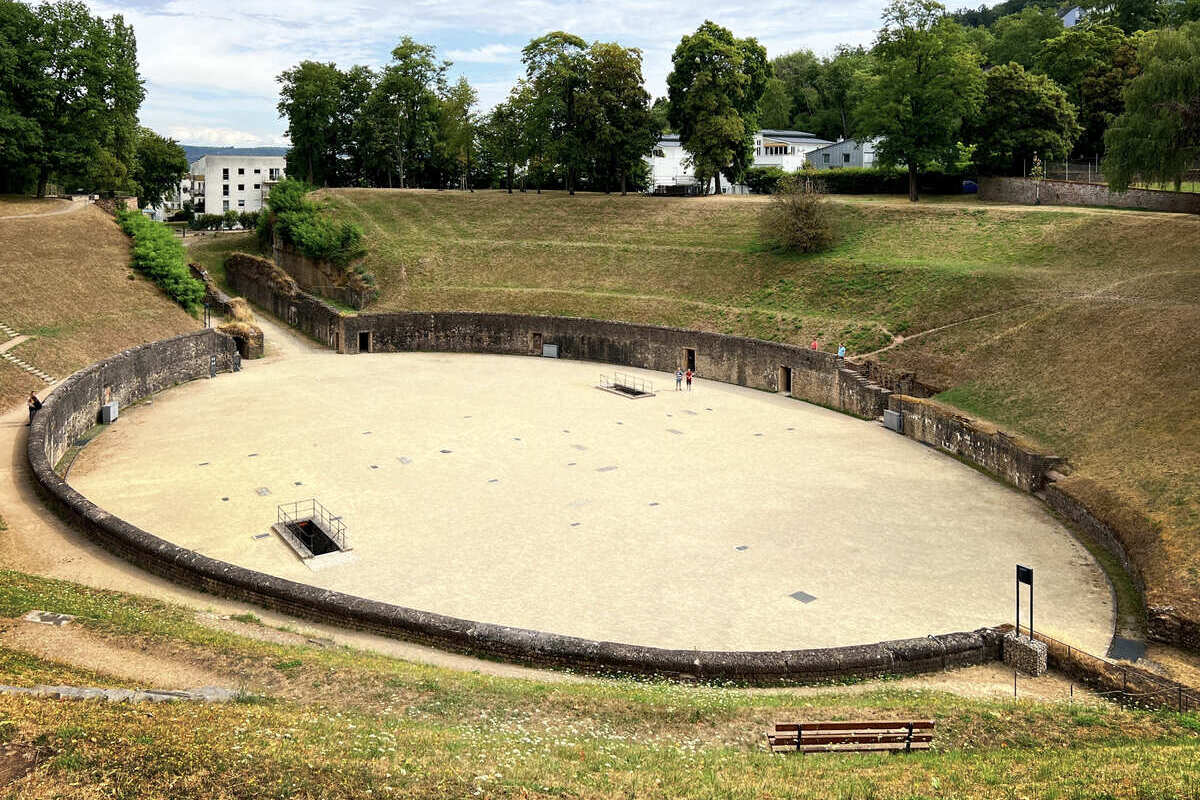
- The Trier Amphitheater, a 2nd-century Roman area that after seated roughly 18,000 spectators at its peak
- The 2nd-century AD Roman Bridge, or Römerbrücke, spanning the Moselle River, whose Roman stone piers are nonetheless supporting the burden of recent visitors virtually 1,900 years later
- The Thermen am Viehmarkt, a lesser-known Roman tub website sitting proper beneath a contemporary glass pavilion—apparently you’ll be able to’t a lot as construct parking in Trier with out digging up Ancient Rome
Is Trier, Germany Safe To Visit?
Wondering how protected Germany is to go to proper now?
The nation stays at Level 2 on the U.S. Department of State’s official Travel Advisory. In plain, non-bureaucratic phrases, this implies Americans can go to whereas exercising ‘increased caution’.
The motive why?
Note From The Editor
Just one sec! If you get pleasure from studying nice human-written articles, the easiest way to see a couple of extra is to follow us on Google so we turn into one in all your most well-liked web sites. Thank you a lot for studying. Now again to the story!
The advisory itself particularly cites terrorism, with U.S. authorities warning that lone actors and extremist teams stay a persistent risk in Germany and elsewhere in Europe.
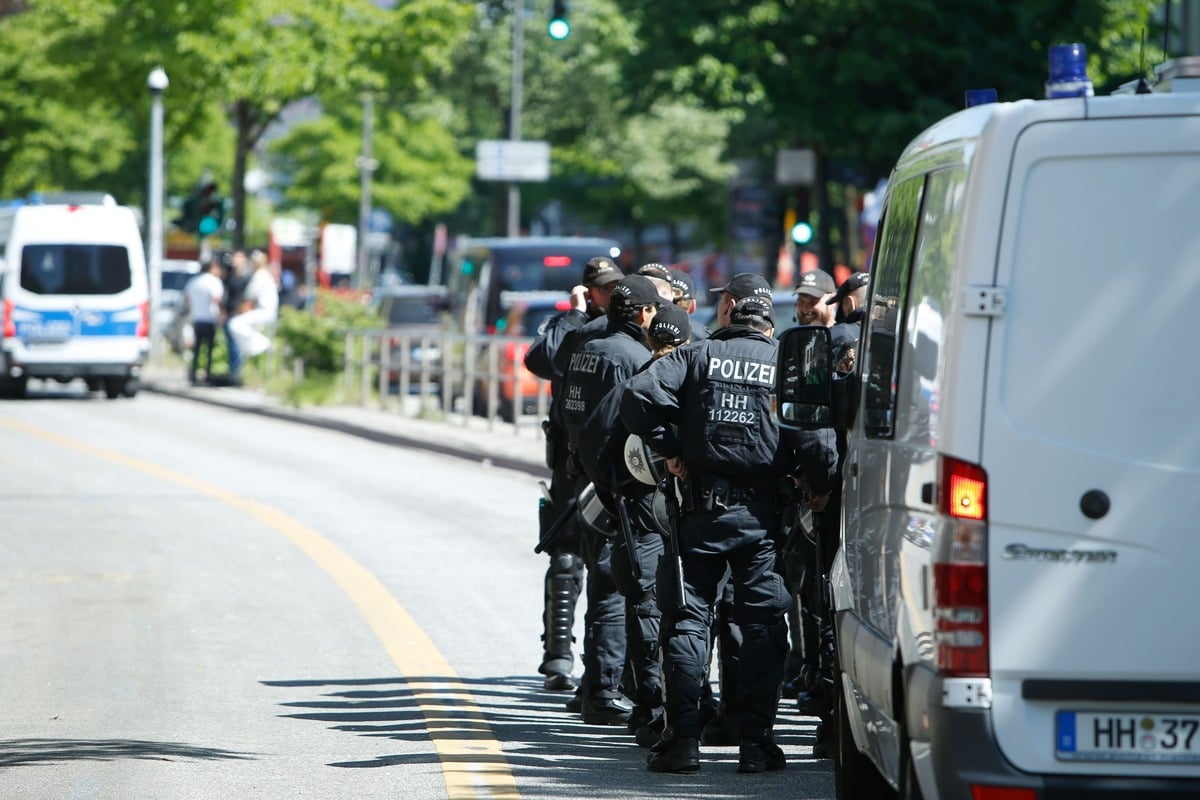
Separately, the Department notes that violent crime is uncommon total, although it’s extra prevalent in main cities, transport hubs, and huge metro techniques. And that’s an necessary distinction right here, as a result of Trier is far more chill and low-key than cities like Düsseldorf, Cologne, or Berlin.
On the Travel Off Path Traveler Safety Index, a rating based mostly on reviews from latest guests, the nation earns a suboptimal 79 out of 100, due partly to the issues already highlighted above.
The excellent news is, even when issues get a bit of bushy in bigger German hubs, cozy little Trier tends to really feel worlds faraway from it.
Numbeo at present provides Trier a Crime Index of simply 29.2 and a Safety Index of 70.8, with perceived violent crime sitting at a remarkably low 19.7 out of 100.
Trier Beyond The Roman Layers
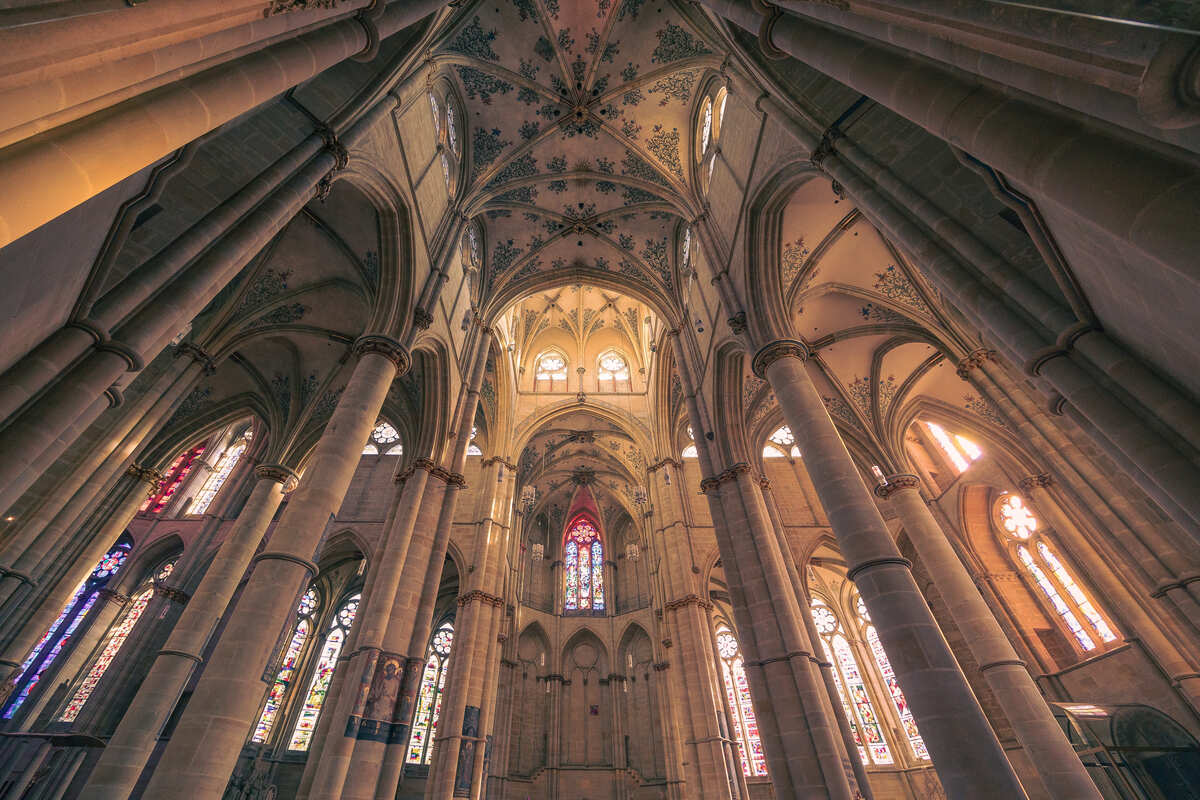
Of course, Trier’s not absolutely Roman this present day, particularly after two full-fledged world wars.
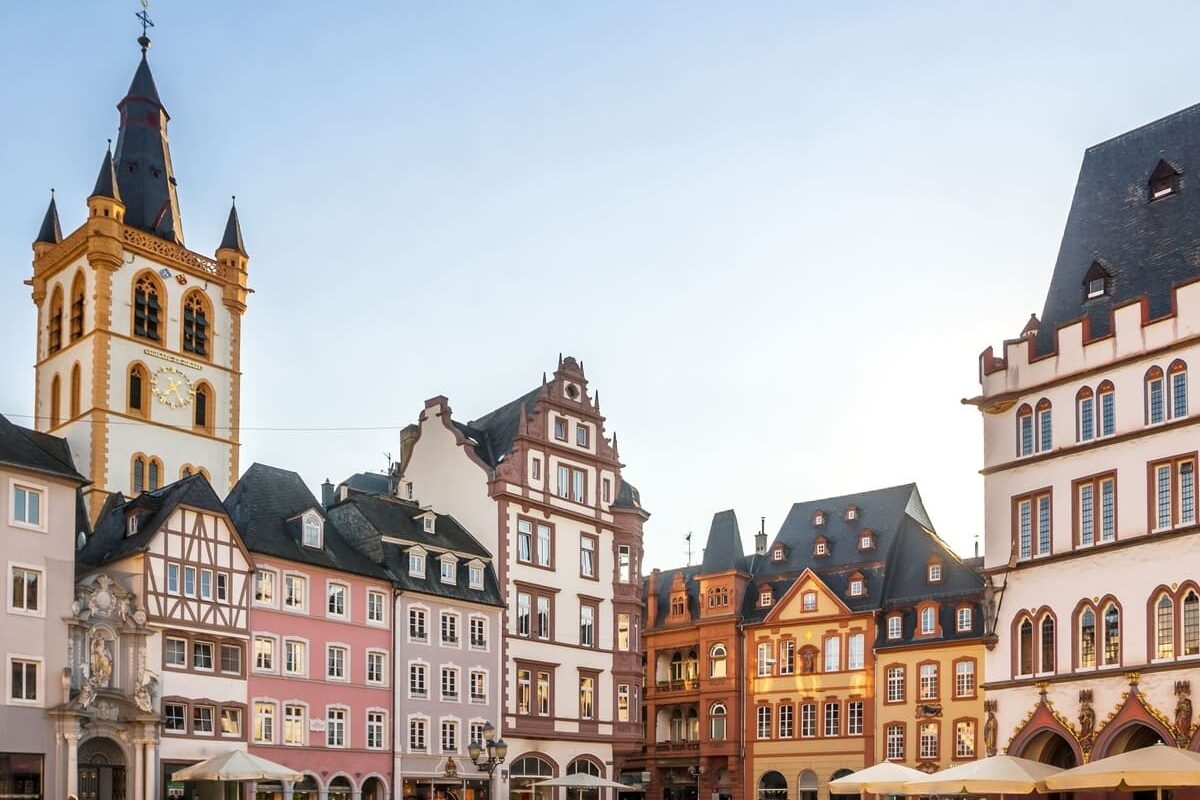
Add in timbered buildings hugging cobbled lanes, buses whooshing previous weathered stone façades, and a vigorous Hauptmarkt flanked by colourful townhouses and low outlets, and also you get this weirdly seamless, surprising mixture of Ancient Rome and a thriving German city.
Outside the picture-perfect historical middle, you’ll discover a vibrant scholar metropolis peppered with low-key bars, Bohemian hangouts, and biergartens galore.
Head out towards Olewig and seize a desk at Blesius Garten, house to Kraft Bräu, Trier’s first fashionable home brewery.
They make every thing from Helles and Dunkel to Weizen and hoppier fashionable craft brews, and a half-liter Kraft Bräu Helles at present prices $7. If you’re solely after a smaller 0.3-liter glass, that’s roughly $4.40.
You’d even be shocked by how comparatively inexpensive consuming out will be.
A full meal in an affordable restaurant in Trier averages round €15, or roughly $17–18, whereas a correct 3-course dinner at a mid-range place works out to round $46 per individual.
The Birthplace Of Communism??
Trier’s enchantment for the traditionally curious doesn’t cease at Roman ruins and $10 döner kebabs, both.
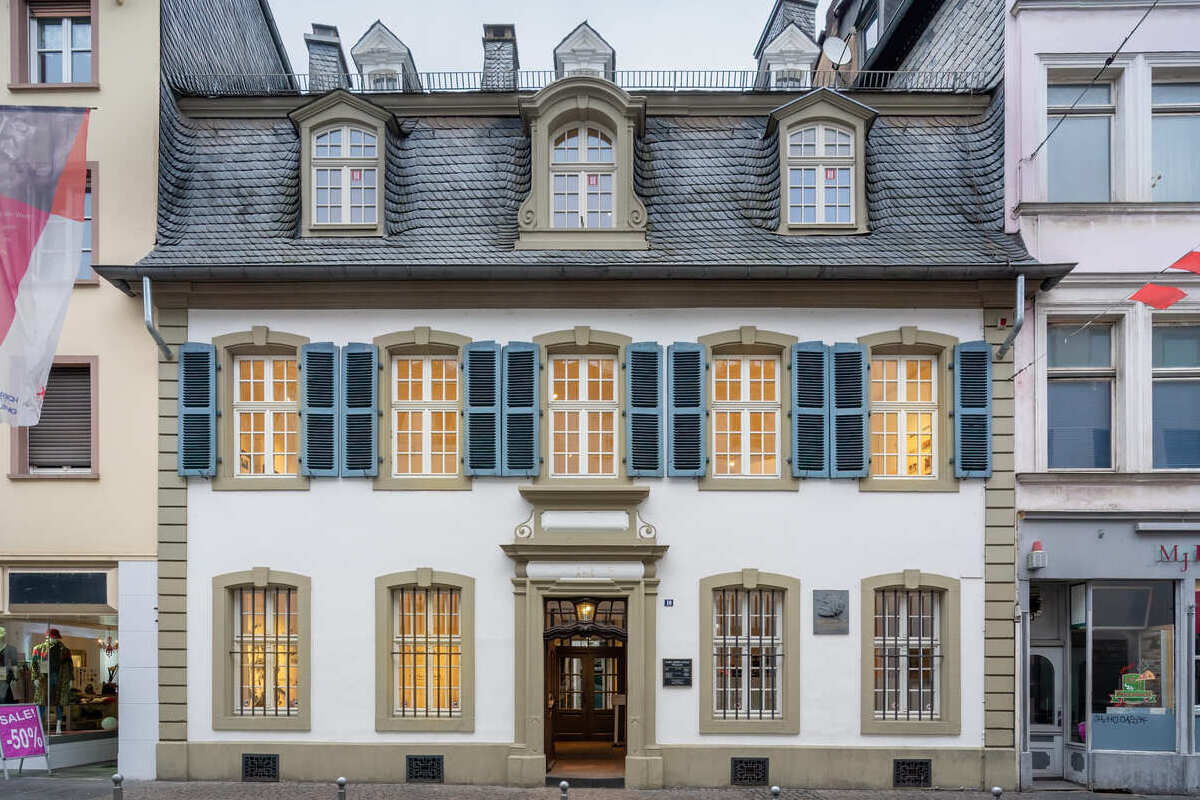
If you ever get cornered with ‘Where was Karl Marx born?‘ throughout a Friday-night pub quiz, now you understand which reply to scream earlier than Steve from Accounting steals your level.
Yep, my proletarian comrade: the daddy of Marxism, and probably the most consequential and controversial thinkers to have gone down within the annals of historical past, first noticed daylight proper right here in Trier.
More particularly, at Brückenstraße 10.
That Baroque townhouse is now the Museum Karl-Marx-Haus, and whereas the employees of the world haven’t fairly united but and we’re not all dwelling rent-free in some post-capitalist utopia, you’ll nonetheless should fork out €7, or round $8, to enter.
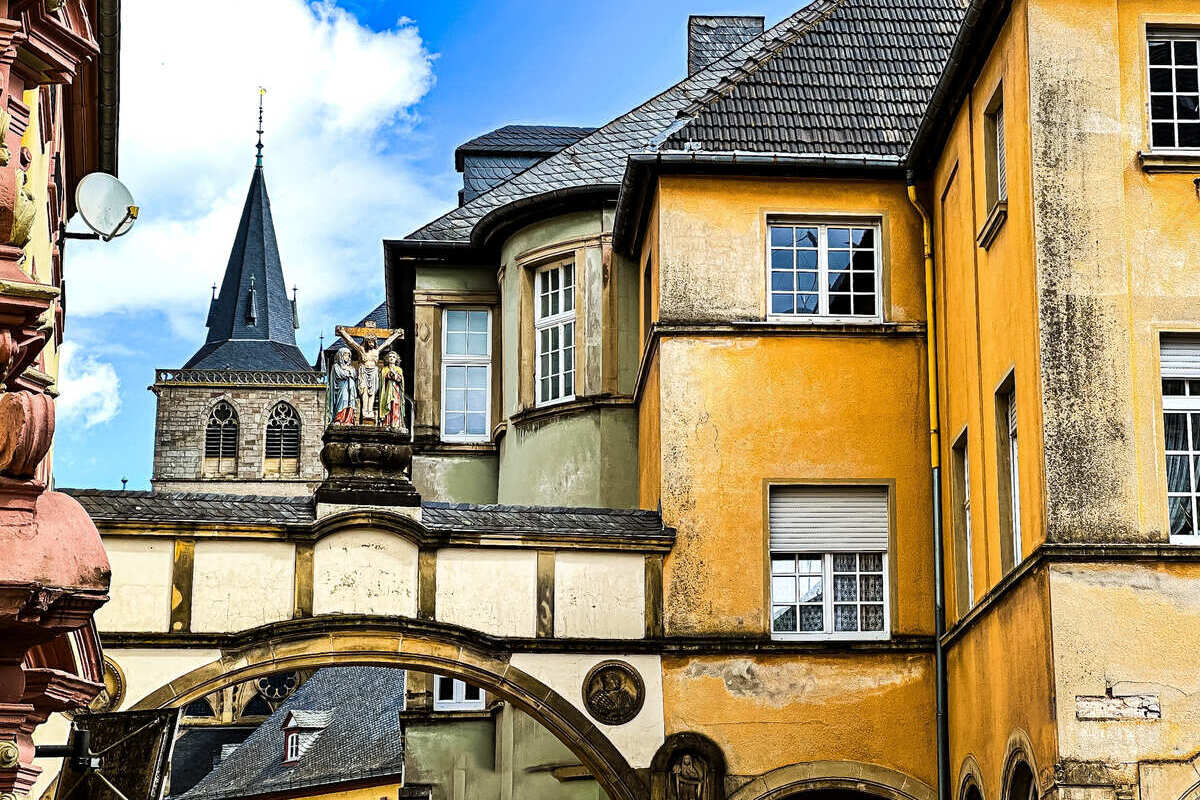
Your common German metropolis serves up some variation of the standard combo of biergartens, reconstructed medieval façades, procuring streets, and rows upon rows of kebab joints clustered round a barely chaotic Hauptbahnhof district.
Trier has its justifiable share of these, don’t get us fallacious, but it surely appears like a correct step down in depth from Munich’s overcrowded, over-commercialized center.
Plus, it has precise Roman ruins.
Europe’s New Entry Rules
Going to Europe within the close to future?
Don’t depart your paperwork homework till the final minute: test in the event you’re in control with the continent’s new border and journey rules.

Americans visiting for a brief keep at the moment are required to register biometric information, including fingerprints and a facial image, when getting into by way of an exterior border into the Schengen Area, a passport-free journey zone comprising 29 European international locations.
Germany’s a kind of.
The Entry/Exit System has been absolutely operational since April 10, 2026, and digitally information arrivals and departures, changing the outdated passport-stamping course of.
This is designed partly to make sure vacationers adjust to the Schengen Area’s guidelines: as an American customer, you’ll be able to usually stay within the multi-country territory for solely 90 days out of any rolling 180-day interval.
Head over to the Entry Requirement Checker, sort in your vacation spot, and test what entry guidelines apply as a U.S. passport holder.
Enter your e-mail deal with to subscribe to Travel Off Path’s newest journey information, straight to your inbox
